How-To Guides · DIY & tools
How to Find a Stud in a Wall (6 Easy Ways)
Hanging a TV, shelves, or a heavy mirror? You want to screw into a stud, the wooden frame behind the wall. Here are six easy ways to find one, even without a stud finder.
1. First: How Studs Are Spaced
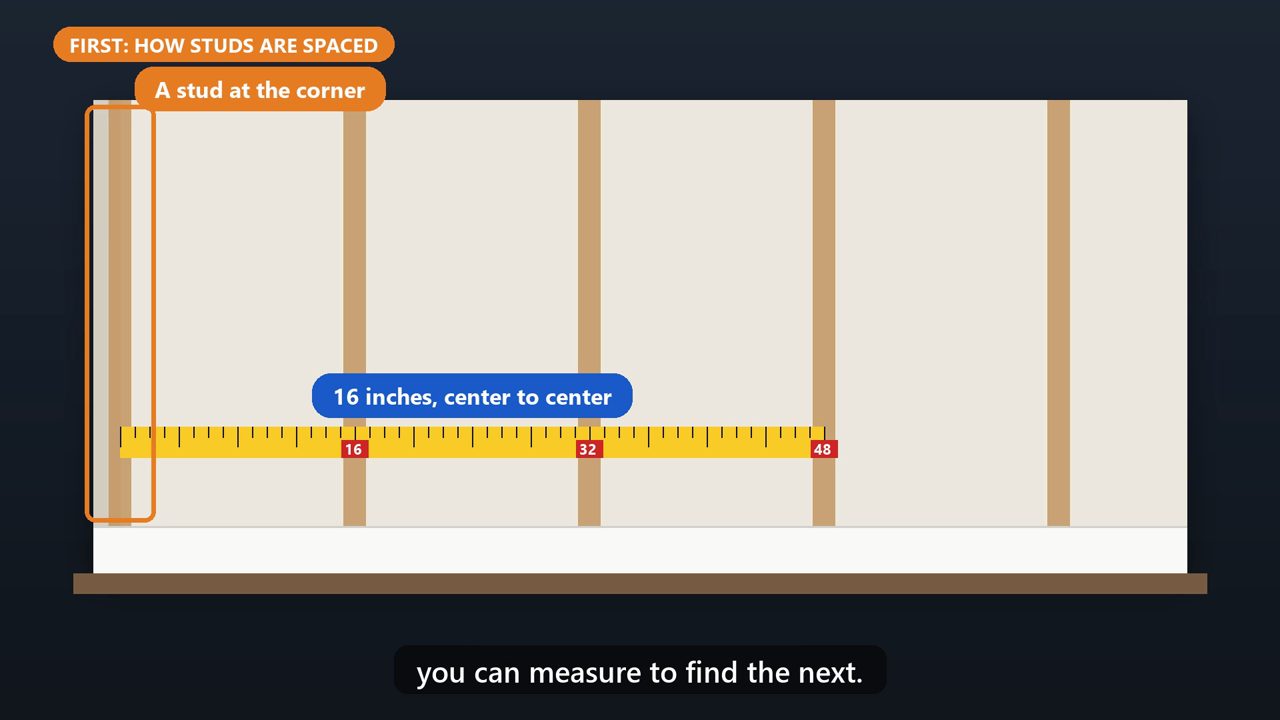
First, know the pattern. In most homes, studs are spaced 16 or 24 inches apart, measured center to center. And there's almost always a stud right at a corner. So once you find one stud, you can measure to find the next.
2. Way 1: Outlets And Switches
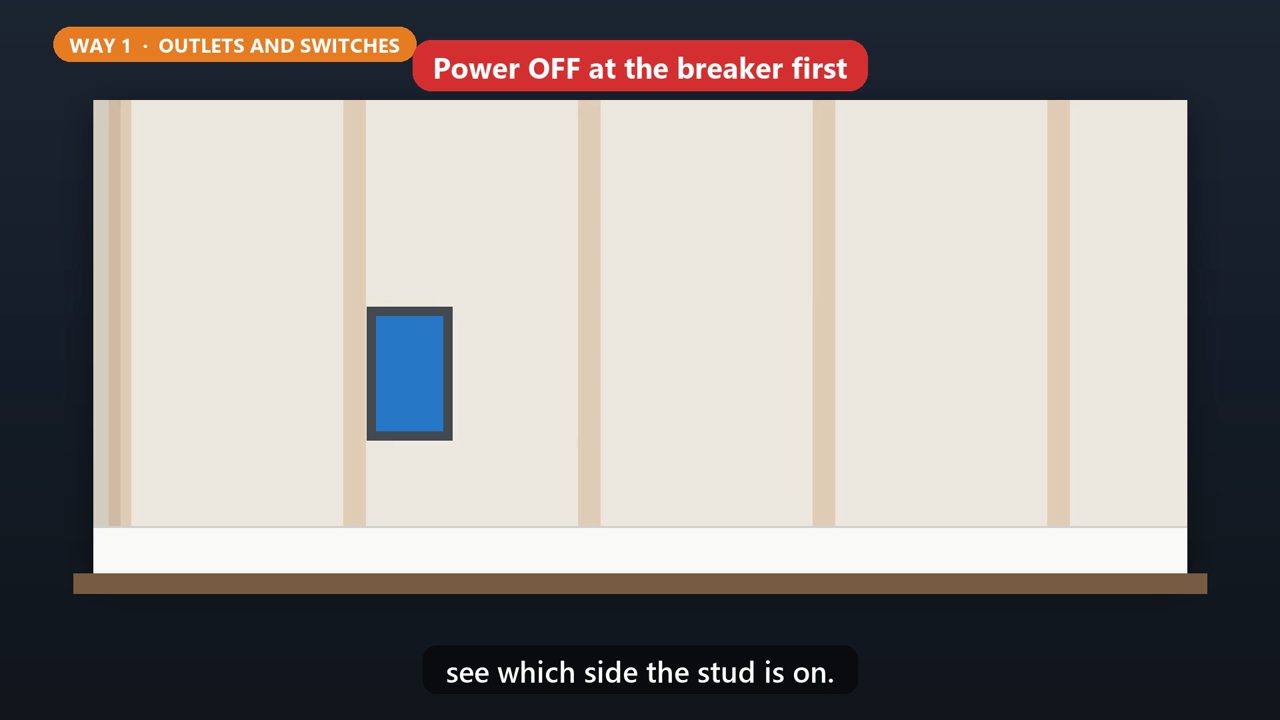
Way one. Outlets and light switches. Their electrical boxes are usually attached to the side of a stud. Turn off the power at the breaker, take off the cover plate, and look beside the box to see which side the stud is on.
3. Way 2: A Magnet
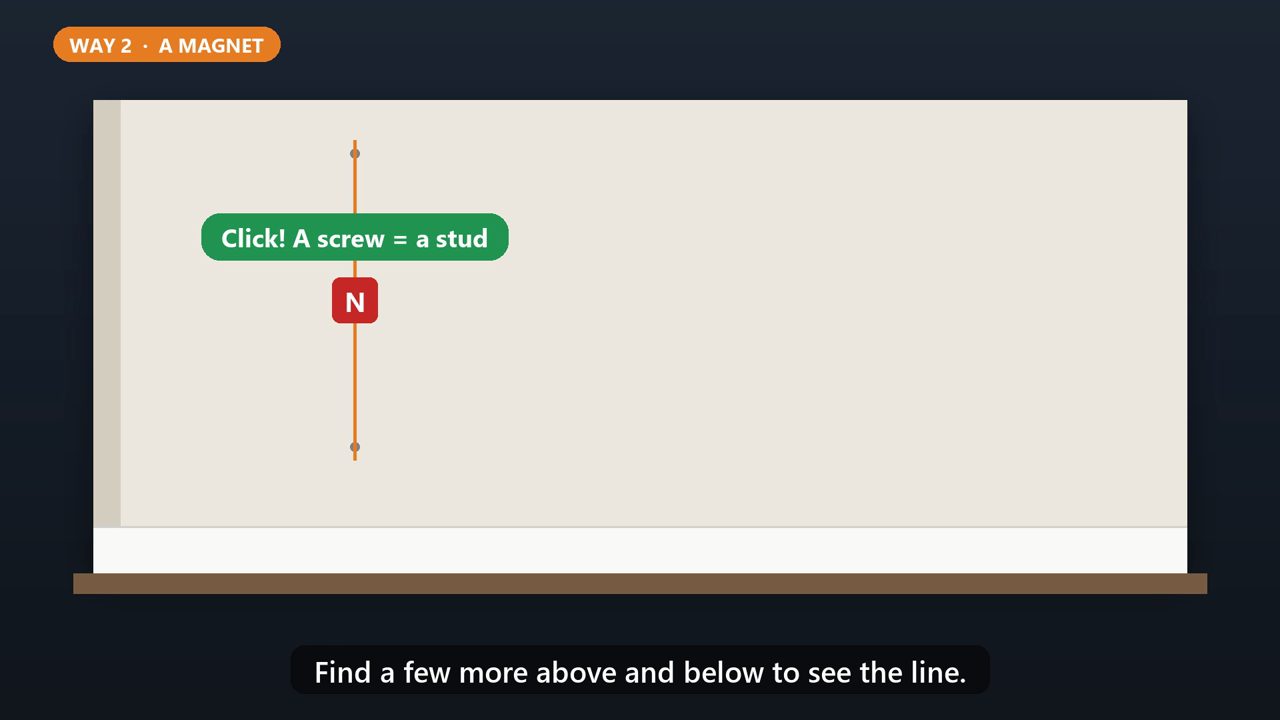
Way two. A strong magnet. The drywall is held on with nails or screws driven into the studs. Slide a strong magnet slowly across the wall. When it grabs a screw head, you've found a stud. Find a few more above and below to see the line.
4. Way 3: The Baseboard
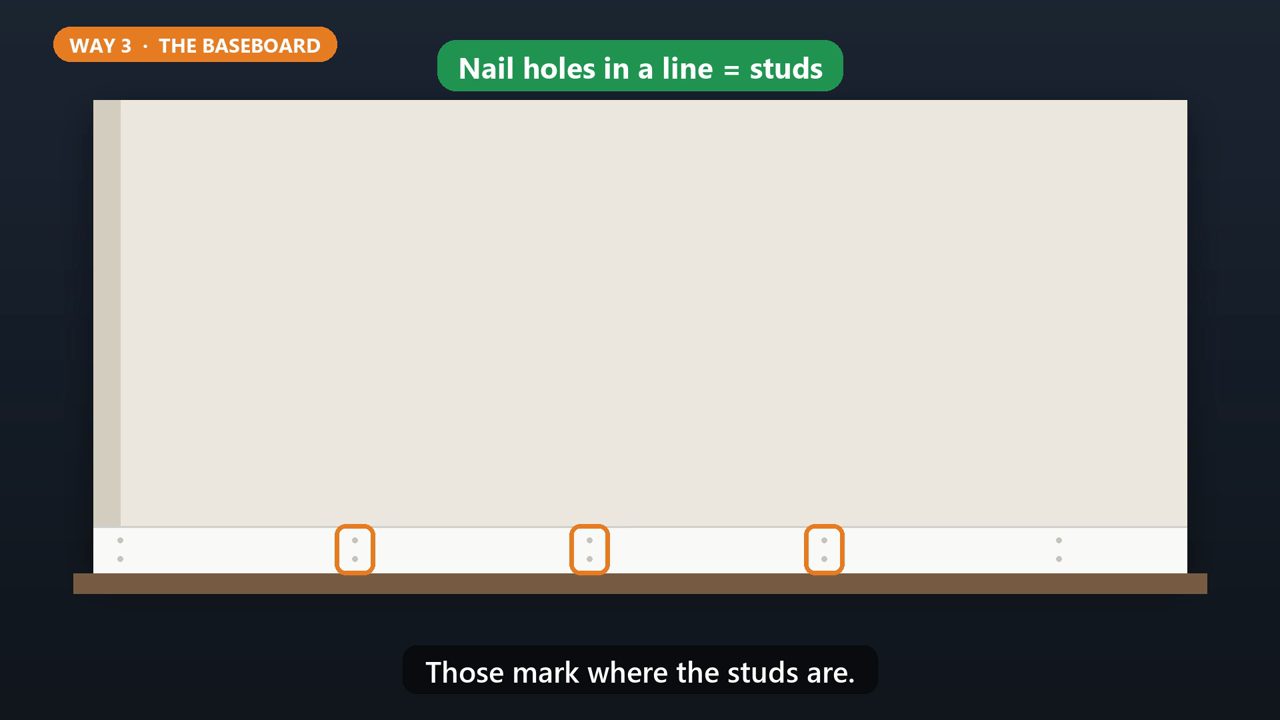
Way three. Look at the baseboard. Carpenters nail trim into the studs, so look for small filled nail holes in a line. Those mark where the studs are.
5. Way 4: A Flashlight
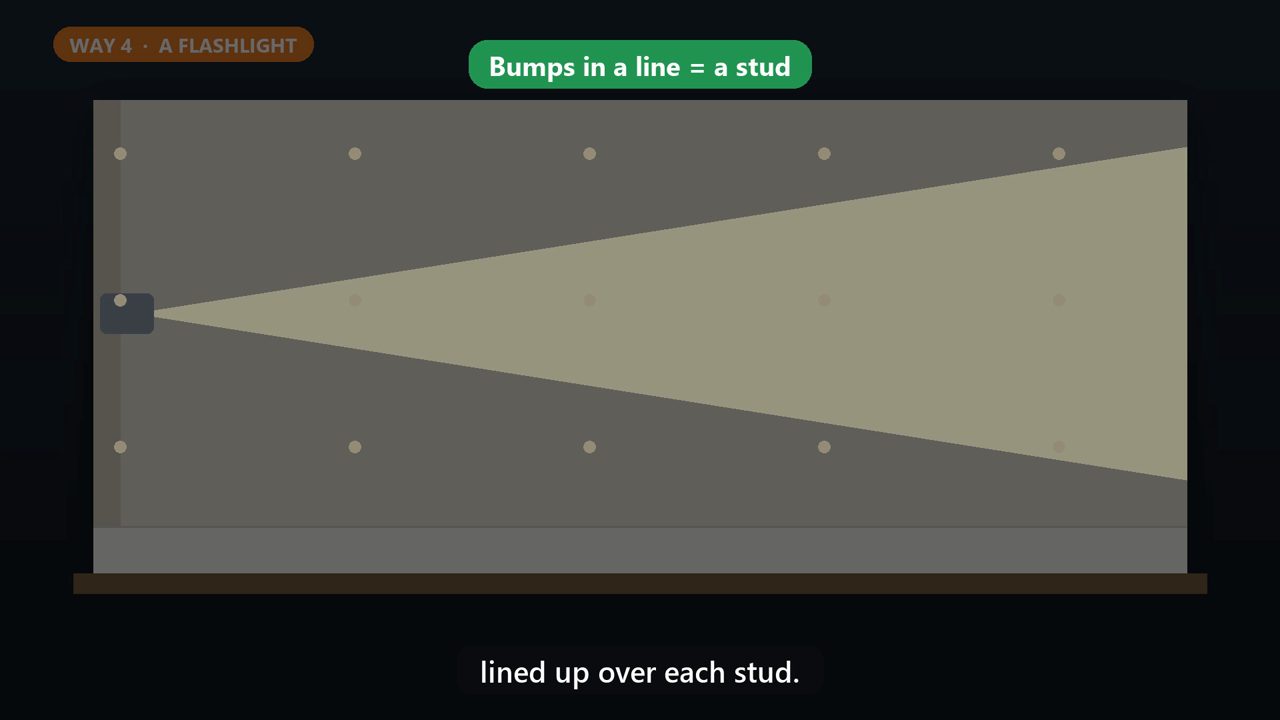
Way four. Turn off the room lights, and hold a flashlight flat against the wall, shining along it. The low angle shows tiny bumps and dimples from the screws, lined up over each stud.
6. Way 5: Knock

Way five. Knock on the wall as you move sideways. Between studs, it sounds hollow. Over a stud, the sound gets higher and more solid. It takes a little practice, so use it with another method.
7. Way 6: Confirm It
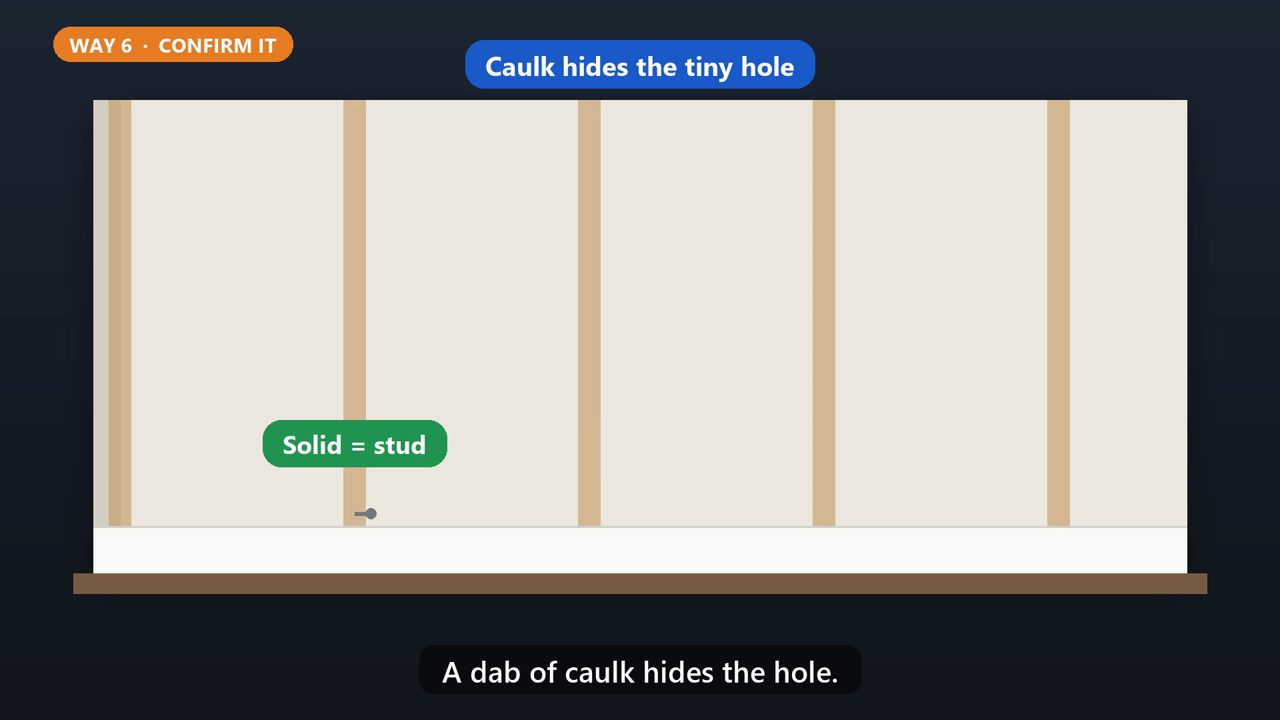
Way six, the most reliable way. Tap a thin finish nail into the wall just above the baseboard. If it hits solid wood, that's a stud. If it slides in easily, move over a little and try again. A dab of caulk hides the hole.
8. The Fastest Way

And of course, an electronic stud finder is the fastest way. But it's smart to double-check with one of these methods. Wires and pipes can also run inside walls, so drill carefully.
Tools that make this easier
Simple Google Sheets + Excel tools from WiscHaven. Buy once, no subscription.


Sources
Checked against the official sources above. Steps can change as apps update - tell us if something looks different: wischavenindustries@gmail.com